
Which Is Better for Your Garage: Swisstrax Flooring, Coatings, or Concrete?
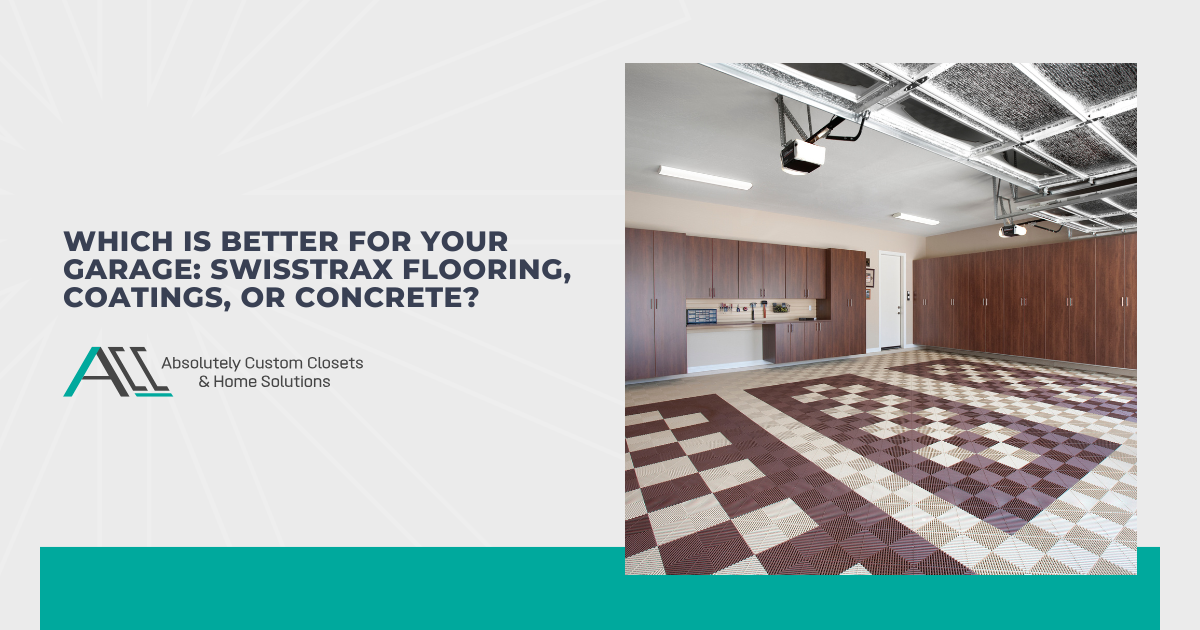
Your garage floor probably tells on you. Salt stains from winter boots, a permanent oil shadow where the car sits, and tire marks that never fully scrub away pile up faster than most people expect. A coat of paint or a cheap sealant usually goes down first, and it rarely survives past one season before peeling or scuffing again. This repeat failure is what eventually has you looking into Swisstrax flooring, since the surface underneath was never built to handle how you actually use the space.
Getting it right this time means understanding how interlocking tiles, poured coatings, and plain concrete each respond to heat, moisture, and impact. Pick the wrong one, and you could be redoing your floor sooner than you'd like. I've walked enough homeowners through this decision to know it usually comes down to how much upkeep you're willing to do and how long you want the result to hold up. Cost matters too, but only once you know what you're actually paying for over the years the floor stays down.
Comparing Swisstrax flooring, coatings, and concrete side by side makes the right choice obvious:
- What is Swisstrax flooring?
- What are epoxy and polyaspartic garage floor coatings?
- What are your options with bare or sealed concrete?
- Durability and damage resistance
- Installation time and process
- Cost and long-term value
- Maintenance and cleaning requirements
- Style, color, and customization options
Each section unpacks what actually separates these three options, so you can match the floor to how you use your garage.
What Is Swisstrax Flooring?
Swisstrax flooring is a modular garage floor system made of interlocking PVC tiles that snap together over your existing concrete slab. Each tile measures about a foot square and clicks into the tiles around it, so you end up with a continuous floating floor that never touches an adhesive. The interlocking design comes from Swiss engineering, and it's built to expand and contract with temperature swings without buckling or separating at the seams.
The tiles themselves come in a raised, textured surface designed for traction, drainage, and airflow. Small channels underneath carry water, road salt, and debris straight through to the concrete below so nothing pools on top, which matters if you live somewhere winters bring in slush and grime on a daily basis. The raised pattern also creates a small air gap between the tile and the slab, so moisture doesn't get trapped against your concrete the way it can under a solid mat or a sealed coating. This gap also helps tiles sit evenly over minor cracks or unevenness in older slabs.
Because the tiles interlock without bonding to the floor, you can pull up a damaged section and swap in a new tile without redoing the whole garage. If you ever move, you can even take the flooring with you and reinstall it somewhere else. Swisstrax also comes in a range of colors and patterns you can mix to create borders, checkerboards, or a solid look, so you're not limited to the flat gray most garage floors start with. This flexibility is part of why the tiles show up as often in workshops and home gyms as they do in garages built purely for parking.
What Are Epoxy and Polyaspartic Garage Floor Coatings?
Garage floor coatings are resin-based products applied directly over your existing concrete slab to seal it, protect it, and change its appearance. A coating bonds to the concrete itself and becomes part of the slab, unlike a tile that sits above it as a separate layer. Most coating jobs start with grinding or acid-etching the concrete so the resin has something to grip, followed by one or more layers of the coating material itself. Epoxy is the more established of the two options, prized for its thick build and strong bond, though it typically takes a day or two per coat to cure and can amber slightly with UV exposure.
Polyaspartic is a newer coating chemistry built to cure dramatically faster, often within just a few hours, which shortens how long your garage stays out of commission during installation. It also holds up better against UV yellowing, so the color stays truer over the years you park on it. If you can't afford to have your garage unusable for a full week, polyaspartic is usually the more practical fit once you know about the faster turnaround. The tradeoff is a higher cost per coat compared to standard epoxy.
Both coatings create a smooth, seamless surface that resists stains and cleans up easily, but neither one escapes the fact that they're bonded permanently to your slab. Any crack, chip, or shift in the concrete underneath eventually telegraphs through the coating on top, since there's no flexible layer absorbing that movement. Fixing damage usually means grinding down and recoating the affected area, and matching that patch to the surrounding finish isn't always seamless. This relationship between the coating and the concrete beneath it becomes a bigger factor once you get into how each flooring option handles real damage over years of use.
What Are Your Options With Bare or Sealed Concrete?
Plenty of garages simply have concrete and nothing else, which means the slab poured during construction is doing all the work with no added protection. The surface handles moisture, oil, and temperature changes on its own, and how well it holds up depends heavily on whether you've left it bare or given it some kind of treatment. Concrete isn't a single fixed option so much as a spectrum, ranging from completely untouched to sealed or stained. Each version changes what you're dealing with day to day.
Here's how the three most common treatments compare:
- Bare Concrete: No treatment at all, so it absorbs oil, salt, and moisture directly into the pores, which leads to staining and gradual surface breakdown.
- Sealed Concrete: A penetrating or topical sealer fills those pores to block moisture and stains, though it wears down and needs reapplication every couple of years.
- Stained Concrete: Acid or water-based stain adds color and some visual interest, but it still relies on a sealer on top for any real protection against wear.
None of these treatments change what the concrete is structurally, so cracks, pitting, and dusting stay part of the deal regardless of which version you're working with. A slab poured decades ago is also more prone to hairline cracks from years of freeze-thaw cycles, which no sealer or stain can fully hide. Concrete gives you the lowest upfront cost of any option on this list, but that low starting point comes with the most ongoing attention if you want it to look decent over time.
Durability and Damage Resistance
A garage floor proves what it's made of on the day you drop a socket wrench, spill brake fluid, or drive in on a January afternoon with salt caked to your tires. Each of the three options responds to daily wear differently, and the gap between them widens the longer the floor stays down. I've found the easiest way to compare them is criterion by criterion rather than system by system, since the same stress test tends to expose very different weaknesses.
The breakdown below compares all three systems against the criteria that matter most for everyday garage use:
- Impact Resistance: Swisstrax tiles flex slightly under impact and distribute force across the interlocking grid, so a dropped tool rarely leaves a mark. Coatings resist light impact well but can chip at the point of a hard strike, exposing bare concrete underneath. Bare or sealed concrete can chip or spall on direct impact, and once it does, the damage tends to spread with repeated freeze-thaw cycles.
- Chemical and Oil Resistance: Swisstrax's raised surface channels spills away before they pool, so fluids rarely have time to stain the tile. Coatings form a nonporous barrier that resists most oils and chemicals as long as the seal stays intact. Untreated concrete absorbs oil and chemical spills almost immediately, leaving stains that don't come out with cleaning.
- Cracking Risk: Swisstrax tiles float independently of the slab, so they don't crack even if the concrete underneath does. Coatings bond directly to the concrete, so a crack in the slab usually telegraphs through the coating within a season or two. Concrete cracks on its own timeline, driven by moisture, freeze-thaw cycles, and age, and there's no layer above it to hide or absorb that movement.
- Cold-Weather Performance: Swisstrax tiles are engineered to expand and contract with temperature swings without buckling. Coatings can become brittle in extreme cold, making them more prone to chipping during winter months. Concrete itself is vulnerable to freeze-thaw damage, especially where moisture gets into existing cracks and expands as it freezes.
Line these criteria up side by side, and the pattern that emerges is consistent: floating systems absorb the stress that bonded or unbonded surfaces end up showing on your garage floor. A coating holds its own until the substrate beneath it fails, at which point it fails right along with it. Concrete, with or without treatment, carries the most risk across every category, since you're left with no separate layer to absorb the damage.
Installation Time and Process
Installation timelines vary more than you might expect once you compare all three options. Some systems are ready to use within hours of finishing, while others need most of a week before you can safely park a car or roll in a toolbox. Prep work adds to that timeline too, especially when the existing slab needs grinding, cleaning, or crack repair before anything new goes down. How much disruption your garage sees during the process often matters as much as how long it ultimately takes.
Each system follows a distinct timeline once you factor in prep, application, and cure time:
- Swisstrax Flooring: Installation typically takes a single day since tiles snap together without adhesives or cure time, and the garage is ready for full use immediately after the last tile clicks into place. Minimal prep is needed beyond a clean, dry slab, so there's no grinding or waiting on chemical reactions before you can drive on it.
- Epoxy and Polyaspartic Coatings: Coating installation stretches across multiple days once you account for concrete grinding or etching, applying the base coat, and letting it fully cure before the garage returns to normal use. Epoxy systems often keep a garage off-limits for close to a week, while polyaspartic topcoats can shorten that window to a day or two.
- Bare or Sealed Concrete: Sealing an existing slab is the fastest process here, often finished in a single afternoon since it's just a matter of cleaning the surface and rolling on a sealer. Staining takes longer if you're adding color before sealing, but neither step comes close to the prep work a coating requires.
Installation speed alone doesn't tell the whole story, since a fast install that needs frequent touch-ups later isn't necessarily the better deal for your garage. Swisstrax's same-day process comes from having no adhesive or cure step to wait out, not from cutting corners on durability. A coating needs that longer cure window because the chemical bond forming underneath is what gives the surface its strength. Concrete's quick turnaround comes with the tradeoff of needing that process repeated every few years if you want it to stay protected.
Cost and Long-Term Value
Sticker price is usually the first thing you ask about, but comparing garage floor systems on upfront cost alone leaves out what happens over the years you actually own the floor. Some options save money going in and cost you more in upkeep, while others front-load the investment and stay largely hands-off after that. What matters more is the total each system asks of you once installation, upkeep, and repairs all get added together.
Cost tier and long-term value line up differently across the three options:
- Swisstrax Flooring: Higher upfront investment, but no recoating or resealing costs down the line since the tiles don't degrade the way a bonded surface does.
- Epoxy and Polyaspartic Coatings: Lower upfront cost than tile, with periodic recoating adding to the total the longer you keep the floor.
- Bare or Sealed Concrete: The cheapest starting point, but the shortest lifespan before it needs another round of sealing or repair.
None of these price tiers stay fixed once real-world wear enters the picture, since a coating that needs an early recoat or a slab that cracks ahead of schedule can quickly close the gap with a pricier option. My take is that weighing cost against how long a system holds up without intervention gives you a clearer picture than the initial quote alone. The floor that looks like the better deal on day 1 isn't always the one that costs you less by year 5.
Maintenance and Cleaning Requirements
Every garage floor needs some level of upkeep, but how much time and effort that upkeep takes varies a lot between the three options. With Swisstrax, you're mostly looking at a sweep or a hose-down to clear away dirt, salt, and debris that would otherwise sit on top of a solid surface. Because the raised pattern lets liquid drain through to the concrete below instead of pooling, spills rarely leave a lasting mark if you wipe them up within a reasonable window. An occasional deep clean with mild soap and water handles anything your regular sweep misses.
A coated floor asks a bit more of you to keep it looking its best. Regular sweeping and occasional mopping with a pH-neutral cleaner keep your surface free of grit that can dull the finish over time, and harsh chemicals or abrasive scrubbers can wear down the coating's gloss faster than you'd expect. You'll also want to clean up spills fairly quickly, since standing liquid can eventually work its way into any hairline cracks or seams in the coating. Recoating every several years keeps the protective layer intact, which adds a recurring task you won't have to think about if you go with tile instead.
Bare or sealed concrete asks for the most ongoing attention of the three. You'll need to sweep regularly since untreated concrete constantly sheds fine particles from its surface, and any oil or chemical spill needs your immediate attention before it soaks in and stains permanently. A sealer holds up a bit better against spills, but you'll need to reapply it periodically to keep it doing its job. Skip that maintenance for even a season or two, and the next spill you get to late leaves a mark that's there to stay.
Style, Color, and Customization Options
Garage floors don't have to stick with plain gray, and each option gives you a different level of control over how your space looks in the end. What used to feel like a purely functional decision now carries real design weight, especially for a garage that pulls double duty as a workshop, gym, or hangout space. How much freedom you get depends heavily on which system you choose.
Color and customization options vary quite a bit across the three:
- Swisstrax Flooring: Available in a wide range of solid colors that you can mix and match to create borders, checkerboards, stripes, or custom patterns unique to your space.
- Epoxy and Polyaspartic Coatings: Offered in solid colors, decorative flake blends, and metallic finishes that create a more dimensional, high-gloss look.
- Bare or Sealed Concrete: Limited mostly to acid or water-based stains in earth-tone colors, since the material itself restricts how far the look can be pushed.
Tile and coatings both give you far more creative range than concrete on its own, though they get there in different ways. A tile floor lets you design with distinct color blocks and swap sections later if your taste changes, while a coating creates one continuous surface with a more uniform, polished appearance. Concrete's staining options add some visual interest, but they still work within the material's natural limitations and fall short of a true design choice. If appearance matters as much as function for your garage, that difference in flexibility is worth weighing alongside everything else.
Conclusion
Swisstrax flooring, coatings, and concrete solve the same problem in three very different ways, and the floor that wins out is usually the one that stops needing your attention once it's down. Price matters less than what a floor asks of you after it's installed. Garage floors earn their keep by fading into the background of daily life, and the best ones never turn into another chore waiting for a Saturday. When a floor holds up without a second thought, that's the floor worth calling done.

QUICK LINKS
CONTACT INFO
Absolutely Custom Closets & Home Solutions LLC
7131 West Akron-Canfield Road Suite C, Canfield, OH 44406
Phone
SCHEDULE A CONSULTATION
Contact us, and we will come out and discuss your project free of charge.